We use cookies to power saved baskets, product comparison and personalised recommendations, and for Google Analytics and Google Ads measurement. Declining is fine — some features will just sit dormant and we won't set analytics or advertising cookies. Learn more.
JupiterBlue
Technical questions
The technical answers most often asked by fitters, contractors, and specifiers.
Frames & finishes
Choosing the right frame profile for the application.
Picture frame
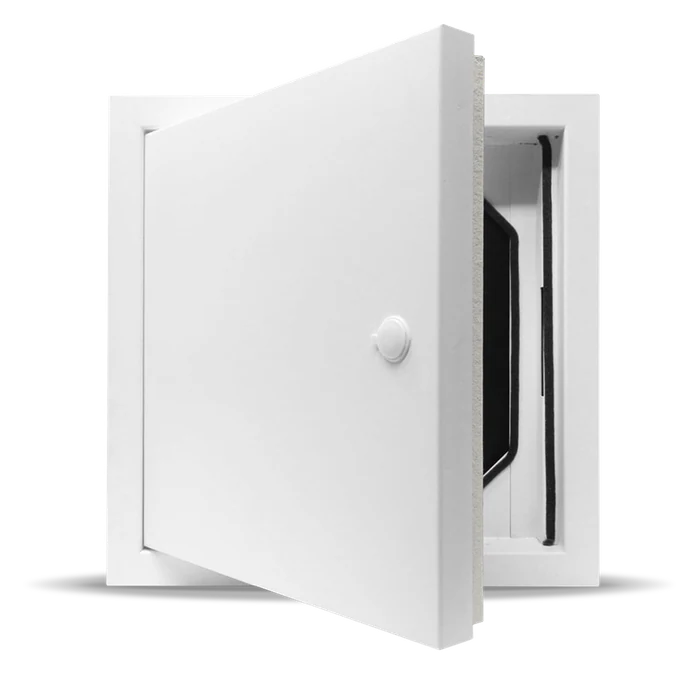
A thin 25mm frame that surrounds and overlaps the panel. Visible on the surface of the wall or ceiling — useful when you want a clear visual indicator of the access point.
Beaded frame
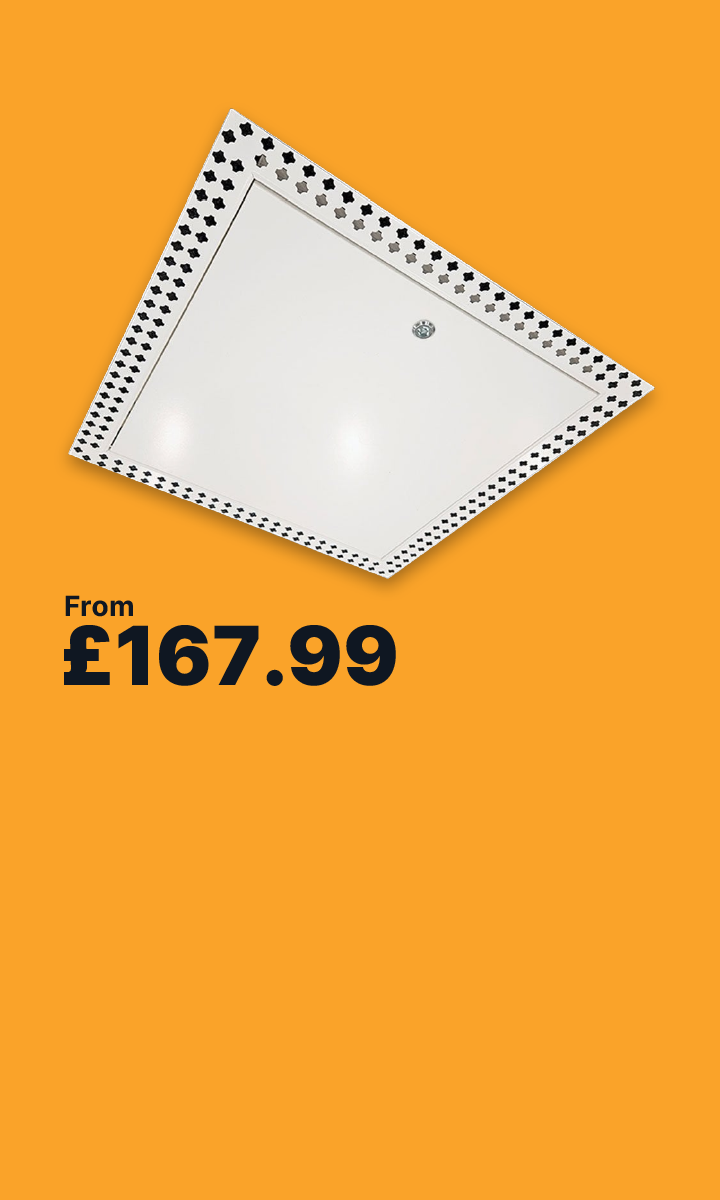
Designed to be plastered into the wall or ceiling. Once decorated, the frame disappears completely — only the door join remains visible.
Thermal performance
How U-values affect heat loss and what to look for.
U-values explained
Heat loss is measured in W/m²K — watts of heat lost per square metre of structure when the exterior temperature is 1°C lower.
The lower the U-value, the better the thermal performance. Insulated access panels can make a meaningful difference to a building's overall thermal efficiency, especially in larger ceiling installations.
Airtightness
Air permeability measured in m³/hr at 50Pa.
Our panels are tested in a rig at 50 Pascals to simulate high wind or HVAC pressure. Lower numbers mean a tighter seal — and a tighter building envelope overall.
Air leakage level
Result (m³/hr @ 50Pa)
Building category
Standard
8.0–10.0
Meets legal passing limit for most UK homes. Allows some heat loss.
Improved
3.0–5.0
"Good practice." Targeted by developers chasing energy goals.
High performance
1.0–2.9
"Best practice." Recommended for air-conditioned buildings.
Super-airtight
0.0–0.9
Our top-spec range (0.76). Suitable for Passive House standards.
Fire ratings
What the standards mean, and which panels go where.
Critical: a "1-hour wall panel" cannot go in a ceiling. Ceiling panels must resist higher horizontal pressure as heat rises — different test, different spec.
Code
Scope
What it guarantees
BS 476: Part 22
British Standard
The industry-standard UK test for fire resistance.
BS EN 1634 / 1364
European Standard
The modern, high-pressure test for new-build specifications.
Bi-directional testing ensures protection from both front and back — essential for riser shafts.
Acoustic performance
Sound reduction in decibels.
Measured on the decibel (dB) scale. Sound behaves like water — it pours through the tiniest gaps if the perimeter seal isn't right.
Noise level
Recommended panel
Typical application
Low
Standard seal
General office or domestic background noise.
Medium
Acoustic-rated (25–30dB)
Nearby conversations or quiet hallways.
High
High performance (35dB+)
Plant rooms, riser pipes, or loud machinery.
Quick answers
The things we get asked most often.
What's the difference between a structural opening and the panel size?
The structural opening is the hole you cut. The panel size is the product you order. There's a 5mm tolerance — so for a 600×600 hole, order a 595×595 panel.
Yes. Most of our standard products can be made bespoke. Pricing depends on size and frame type — get in touch via the contact form with your dimensions and we'll quote.
Do you supply test certificates and datasheets?
Yes — every fire-rated product comes with a downloadable test certificate and installation guide on its product page. Need something specific or older? Drop us a line.
What's the lead time on bespoke orders?
Typically 5–10 working days from order confirmation, depending on size and frame type. We'll confirm a date when we send the order acknowledgement.
Do you offer trade accounts?
We do. Trade accounts come with discounted pricing, dedicated support, and 30-day payment terms (subject to approval). Apply via our contact page — select "Trade Account Application" from the dropdown.